
Swimming Pool Skimmer Repair and Replacement in Dubai
A swimming pool can look perfectly clean on the surface while a small fault around the skimmer is quietly wasting water, pulling air into the system, or weakening the surrounding tiles. In Dubai, where pools work hard through heat, dust, and year-round use, a damaged skimmer is not something to ignore.
The skimmer is one of the most important parts of a pool’s circulation system. It removes leaves, insects, dust, and floating debris before they sink. It also helps water move evenly towards the filtration system. When it cracks, leaks, blocks, or separates from the pool wall, the whole system feels the effect.
Swimming Pool Skimmer Repair and Replacement in Dubai
Total Pools Solutions Technical Services LLC provides professional swimming pool skimmer repair and replacement in Dubai for villas, residential communities, hotels, and commercial pools. Whether the issue is a visible crack, water loss near the skimmer mouth, poor suction, or damaged pipework, the right repair can protect the pool structure and restore proper filtration.

What a swimming pool skimmer does
A pool skimmer is usually installed into the pool wall at the waterline. Its opening faces the pool, and water flows into it as the circulation pump runs. Inside, a basket catches floating debris before water travels through the plumbing to the pump and filter.
A properly working skimmer helps with three main things.
It removes floating debris.
Dust, leaves, insects, flower petals, and small surface debris enter the skimmer basket before they sink to the floor.
It supports water circulation.
The skimmer pulls water from the surface and helps move it through the filtration system. Good circulation prevents stagnant areas and supports more even chemical distribution.
It protects pool equipment.
The basket catches larger material before it reaches the pump. This reduces strain on the pump basket, impeller, and filter.
When the skimmer stops doing its job, the signs can appear in different ways. Some are obvious, such as a cracked faceplate. Others are harder to see, such as a leaking connection behind the pool wall.
Common signs that your skimmer needs repair
A skimmer problem often starts small. A minor crack or weak seal may not look serious at first, but pool water can escape through gaps and damage the surrounding structure over time.
Look for these common warning signs.
Water level drops below normal
All pools lose some water through evaporation, especially in Dubai’s heat. But if the water level drops faster than expected, or always settles around the skimmer level, the skimmer may be leaking.
A leak near the skimmer can happen at the body, throat, pipe connection, gasket, faceplate, or surrounding waterproofing. The source needs proper inspection before repair begins.
The skimmer is cracked or loose
Plastic skimmers can crack because of age, ground movement, poor installation, pressure, or impact. Tiles around the skimmer may also become loose if water has entered behind them.
Small cracks may sometimes be repaired, but larger or structural cracks often call for replacement. A cracked skimmer should not be sealed quickly from the front without checking the full condition behind it.
Debris is not being collected properly
If leaves and dust remain on the pool surface, the skimmer may not have enough suction. This can happen because of a blocked basket, clogged pipe, air leak, low water level, faulty weir flap, or pump issue.
A skimmer that does not collect debris reduces water quality and makes the pool harder to clean.
Air bubbles appear in the return lines
Air bubbles returning to the pool can suggest air is entering the suction side of the system. The skimmer line is one possible source, especially if water level is too low, seals are damaged, or pipework is cracked.
Air in the system can reduce pump performance and create noise or flow problems.
Tiles around the skimmer are stained or hollow
Loose, hollow, or stained tiles near the skimmer can point to hidden leakage. Water may pass behind the tiles, affect the bedding material, and weaken the area around the skimmer opening.
This is why skimmer repair often includes tile removal and proper refitting, not only sealing the visible crack.

Why skimmer problems are common in Dubai pools
Dubai pools face demanding conditions. Heat, sunlight, dust, frequent use, and long filtration cycles all affect pool materials and plumbing.
High temperatures can expand and contract materials. Over time, this can stress seals, gaskets, and fittings. Outdoor pools also collect dust and sand, which means skimmer baskets and lines work harder.
Villa pools may run every day for comfort and appearance. Hotel and commercial pools often have heavier use, which increases wear on fittings. Residential community pools may also need regular checks because many users share the same system.
Poor original installation can make the issue worse. If the skimmer was not supported correctly, waterproofed well, or connected with suitable pipework, faults may show up later as leaks, cracks, or weak suction.
Professional skimmer leakage inspection
Before any repair, the first step is to find the real cause. A wet area near the skimmer does not always mean the skimmer body itself is cracked. The issue could be the pipe connection, surrounding waterproofing, gasket, faceplate, throat, or tile area.
A proper inspection may include:
Checking the visible skimmer body for cracks and separation
Inspecting the skimmer basket, lid, weir flap, and faceplate
Looking for water movement around suspected leak points
Reviewing the water level drop pattern
Testing suction and flow from the skimmer line
Checking nearby tiles, grout, coping, and sealant
Inspecting accessible plumbing and equipment connections
This avoids guesswork. It also prevents repeated patch repairs that fail after a short time.
A skimmer leak should be repaired as a pool structure issue, not only as a surface sealing job.
Cracked skimmer repair
Not every cracked skimmer needs full replacement. If the damage is small, accessible, and not affecting the main structure, repair may be possible.
A professional cracked skimmer repair may involve cleaning the damaged area, preparing the surface, applying suitable repair material, sealing the affected point, and testing the result. The surrounding pool finish must also be checked to make sure no hidden water path remains.
Repair is usually more suitable when:
The crack is minor and localised
The skimmer body is still secure
The plumbing connection is sound
The surrounding tiles and waterproofing are stable
The skimmer still performs well after repair
A quick sealant application is rarely enough for a serious skimmer issue. Pool water pressure, pump suction, chemical exposure, and heat can break down poor repairs. The aim is to restore a watertight and reliable connection, not only hide the visible crack.
Damaged skimmer replacement
Replacement is the better option when the skimmer is badly cracked, warped, loose, or leaking from a point that cannot be repaired properly. It may also be needed when old fittings no longer match the pool’s plumbing needs.
Skimmer replacement is more involved than swapping a visible fitting. In many pools, the skimmer sits behind tiles and is connected to suction pipework inside the pool wall.
A typical replacement can include:
Isolating the affected area
Removing tiles around the skimmer
Cutting out the damaged skimmer body
Inspecting the suction line and surrounding structure
Modifying pipework where needed
Installing the new skimmer securely
Waterproofing and sealing around the installation
Replacing tiles neatly
Testing the skimmer and line under working conditions
The final finish matters. A correctly replaced skimmer should look neat, sit at the right level, connect properly to the plumbing, and work with the pool’s circulation system.
Skimmer pipeline pressure testing
A skimmer can look damaged at the front, while the real leak comes from the suction pipe behind it. This is why pipeline pressure testing is an important part of many skimmer repair jobs.
Pressure testing helps check whether the skimmer line holds pressure without loss. If pressure drops, the line may have a leak, cracked fitting, weak joint, or damaged underground section.
This matters because replacing the visible skimmer without testing the line can leave the main problem unresolved. Once the new skimmer is installed, the pool may still lose water if the pipework is leaking.
Pressure testing is also helpful before plumbing modification. It gives the repair team a clearer view of what needs to be changed, replaced, or sealed.
Plumbing modification and connection work
Skimmer repair often includes plumbing work. Older systems may have weak connections, poor pipe alignment, or fittings that no longer seal properly. In some cases, previous repairs may have left unsuitable joints behind the wall.
Professional plumbing modification may include adjusting the skimmer connection, replacing damaged pipe sections, improving fittings, and reconnecting the suction line in a secure way.
Good plumbing work supports:
Better suction from the skimmer
Less air entering the system
Reduced risk of future leaks
More stable pump operation
Longer service life for the repair
This is especially important for hotels, commercial pools, and shared residential pools, where downtime needs to be kept under control and the system must return to reliable operation.
Waterproofing and sealing around the skimmer
The area around a skimmer is exposed to constant water contact. It also sits at the waterline, where movement, chemicals, heat, and cleaning activity are frequent. Proper waterproofing and sealing are essential.
If the skimmer body is repaired or replaced but the surrounding waterproofing is weak, water can still travel behind the tiles. That can lead to loose tiles, damp patches, stains, and repeat leakage.
A proper repair should treat the full skimmer area, including the joint between the skimmer and pool wall. The materials must be suitable for pool use and able to handle submerged or wet conditions.
Tile removal and professional refitting
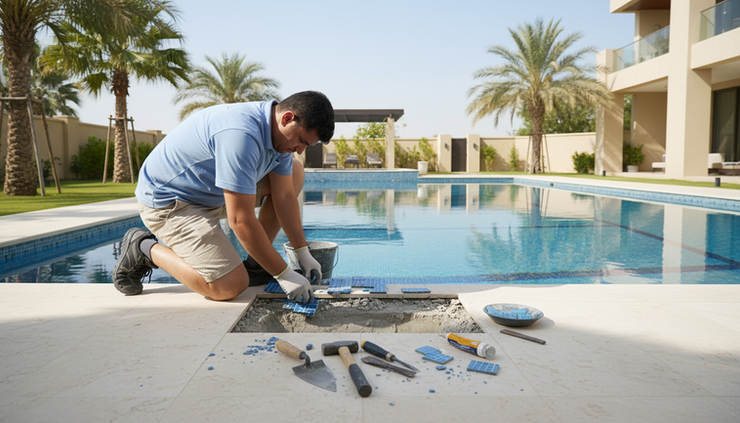
Many skimmer repairs require tile removal. This allows access to the skimmer body, pipe connection, and damaged waterproofing. It also helps avoid rough surface repairs that leave the pool looking unfinished.
After the repair or replacement, tiles should be refitted carefully. The level, spacing, grout, and finish should match the pool as closely as possible. In a villa or hotel pool, appearance matters as much as function.
Professional refitting reduces sharp edges, uneven lines, and weak grout points that can cause future problems.

Testing and commissioning after repair
The job is not complete when the tiles are back in place. The repaired or replaced skimmer must be tested under real operation.
Testing and commissioning may include checking water tightness, running the circulation pump, confirming suction, checking for air bubbles, inspecting the skimmer basket flow, and monitoring the repaired area.
This final stage confirms that the skimmer is collecting debris properly and that the filtration system is receiving steady water flow.
For commercial and hotel pools, testing is especially important because the pool may serve many users. A small fault can become a larger maintenance issue if it is not checked before reopening.
Repair or replacement depends on the damage
The right choice depends on the condition of the skimmer, pipework, and surrounding structure.
Repair may be suitable | Replacement may be better |
Minor visible cracking | Severe cracking or broken skimmer body |
Skimmer remains firmly fixed | Skimmer is loose, warped, or separated |
Pipework tests well | Pipeline or connection is damaged |
Surrounding tiles are stable | Tiles are loose or water-damaged |
Leak is small and localised | Leak returns after previous repairs |
A site inspection gives the clearest answer. In many cases, the most cost-effective solution is the one that solves the cause fully the first time.
Why choose a specialised pool repair team
Skimmer work sits at the meeting point of pool structure, plumbing, waterproofing, tiling, and filtration. A general patch repair may not deal with all of these areas.
Total Pools Solutions Technical Services LLC handles the full process for swimming pool skimmer repair and replacement in Dubai, including:
Skimmer leakage inspection
Cracked skimmer repair
Damaged skimmer replacement
Skimmer pipeline pressure testing
Plumbing modification and connection work
Waterproofing and sealing around the skimmer
Tile removal and professional refitting
Testing and commissioning
This type of complete service is useful for villas, residential communities, hotels, and commercial pools that need a clean finish and dependable performance.
Simple maintenance tips after skimmer repair
After the skimmer is repaired or replaced, regular care helps keep it working well.
Clean the skimmer basket often, especially after windy days or garden maintenance. Keep the pool water level around the correct height, usually near the middle of the skimmer opening. Do not let the pump run if the water level is too low, because the skimmer can draw air.
Check the skimmer lid, basket, and weir flap during routine cleaning. If the skimmer starts making unusual sounds, loses suction, or fails to collect debris, arrange an inspection before the issue grows.
Also watch the tiles around the skimmer. Loose grout, stains, or movement can be early signs of water passing where it should not.
Reliable skimmer service across Dubai
A damaged skimmer can waste water, reduce circulation, and put extra strain on the filtration system. It can also lead to tile damage and hidden leakage around the pool wall. The sooner the issue is checked, the easier it is to control the repair and protect the pool.
Total Pools Solutions Technical Services LLC provides skimmer leakage inspection, repair, replacement, plumbing work, waterproofing, tile refitting, and testing for pools across Dubai, UAE.
For professional pool skimmer repair and replacement services, visit www.totalpoolsdubai.com.


Comments